Short answer
Fare evasion becomes a criminal matter when an operator prosecutes instead of issuing a penalty fare. Ticket offences under the Railway Byelaws don't need intent and carry fines up to £1,000. Under the Regulation of Railways Act 1889, travelling with intent to avoid payment carries up to £1,000, and a repeat offence up to three months' imprisonment.
Fare evasion is often seen as a mere inconvenience, with people assuming they will simply pay a penalty and move on. However, a simple ticket dispute can escalate into a legal matter, particularly if an operator believes there was a deliberate intent to avoid payment or a repeated failure to pay. Fare evasion solicitors often see how a seemingly harmless oversight turns into a prosecution, leaving passengers facing court, fines, and a criminal record.
This article explains the point at which fare evasion shifts from a civil penalty to a criminal offence under UK law. It tackles common myths about what operators can and cannot do, explains the difference between honest mistakes and deliberate misconduct, and sets out ways to protect your rights if you are under investigation for fare evasion.
Is fare evasion a criminal offence in the UK?
Which laws apply to fare evasion?
On the railways, fare evasion can be prosecuted under the Railway Byelaws or the Regulation of Railways Act 1889, section 5. TfL also prosecutes under its own byelaws. Ticket offences under the Railway Byelaws are strict liability, meaning the offence can be proved simply because you travelled without a valid ticket, regardless of intent. Bus operators can also issue penalty fares or prosecute, depending on local rules.
| What happens | Law | Intent needed? | Maximum penalty |
|---|---|---|---|
| Penalty fare (civil, not a conviction) | Railways (Penalty Fares) Regulations | No | National Rail in England: £100 plus the full single fare (£50 plus the fare within 21 days) |
| Travelling without a valid ticket | Railway Byelaws | No (strict liability) | Fine up to £1,000 (level 3) |
| Failing to produce a ticket or pay the fare, or refusing to give your name and address, when asked | RoRA 1889, s.5(1) | No | Fine up to £500 (level 2). Not imprisonable |
| Travelling with intent to avoid payment, or giving a false name or address | RoRA 1889, s.5(3) | Yes, intent must be proved | Fine up to £1,000 (level 3). A second or later offence can carry up to 3 months' imprisonment |
Figures checked October 2026. Penalty fare source: Railways (Penalty Fares) (Amendment) Regulations 2022.
What is a civil penalty?
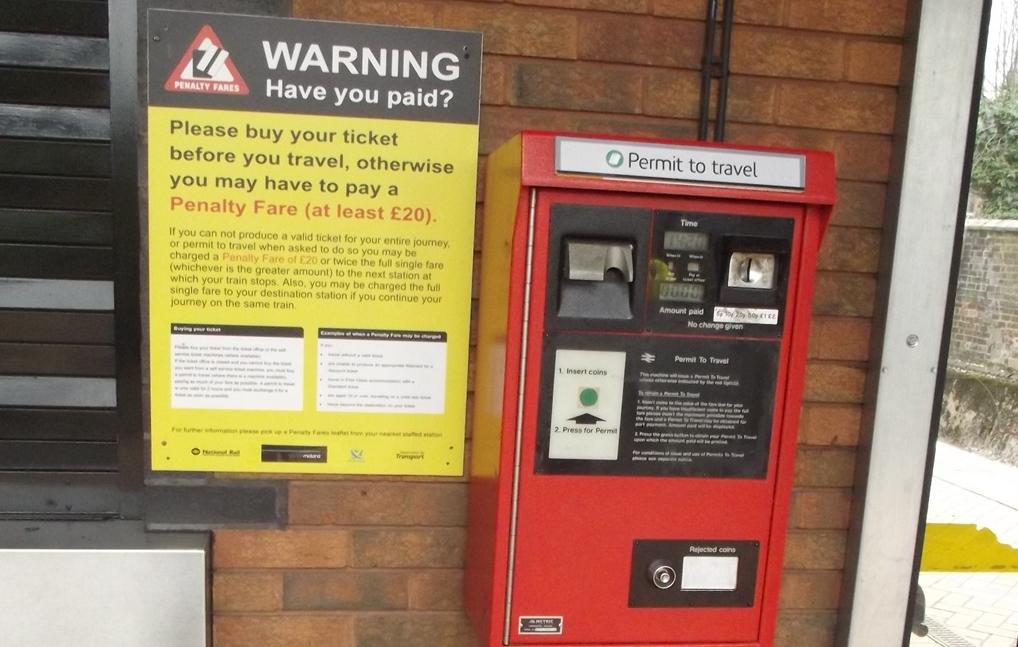
Many fare evasion incidents begin with a penalty fare, which is a civil charge, not a criminal conviction. On National Rail in England it is £100 plus the full single fare, reduced to £50 plus the fare if paid within 21 days; on TfL it is £100, or £50 within 21 days. Paying it on time normally resolves the matter without a criminal record.
When do things escalate?
Not every accidental underpayment ends in court, but repeated incidents, deliberate avoidance, or ignoring penalty notices can lead operators to take stronger action. At that point, fare evasion can move from a civil penalty to a criminal prosecution.
What are the common myths about fare evasion?
Myth 1: “It's only a fine, so it's not serious”
Some passengers assume that whether they pay a penalty fare or ignore it, there are no major consequences. In reality, operators do prosecute, especially repeat cases or where the unpaid amount is large. A single incident can also lead to prosecution if the operator believes fraud was involved.
Myth 2: “I didn't intend to evade the fare, so it can't be criminal”
Ticket offences under the Railway Byelaws are strict liability, so intent does not need to be proved. Courts may treat genuine mistakes more leniently, but "I didn't mean it" is not a defence to a byelaw offence. Intent does matter for the more serious offence under section 5(3) of the Regulation of Railways Act 1889, where the prosecution must prove you intended to avoid payment.
Myth 3: “I paid the difference later, that should solve it”
Paying the outstanding fare after being caught does not necessarily stop a prosecution if the operator believes your actions were deliberate. If you are accused of more serious misconduct, such as using someone else's ticket or a forged pass, paying the original fare might not end the matter.
Myth 4: “Fare evasion means prison”
Prison is rare. Only a second or later offence of travelling with intent to avoid payment (or giving a false name or address) under section 5(3) can carry up to three months' imprisonment. Most cases end in a fine, costs and repayment of the fare, or an out-of-court settlement. Refusing to give your name and address when asked is itself an offence, so cooperating with staff matters.
When does fare evasion cross the line?
Deliberate dishonesty
Using another person's season ticket, a counterfeit pass, or repeatedly travelling beyond your paid zone may be treated as intentional, going beyond an accidental oversight.
Multiple unpaid penalty notices
If you repeatedly ignore penalty fares, operators may treat this pattern as systematic evasion rather than a single slip-up.
Aggravating factors
A case is more likely to be prosecuted if other factors are present, such as:
- Giving false details to inspectors.
- Refusing to cooperate with revenue protection officers.
- Trying to leave a station or obstruct staff carrying out their duties.
When these factors are present, operators often decide that a penalty fare is not enough and bring a prosecution.
How does a case go from notice to court?
1. Penalty fare or incident report
It often starts with a penalty fare, which you have 21 days to pay at the reduced rate or appeal. Alternatively, the inspector may take your details and report the incident for possible prosecution.
2. Investigation by the operator
In more complex cases, particularly suspected repeat incidents or fraud, the operator may investigate further. It may review CCTV, check your travel history, or take statements from inspectors. You may receive a letter asking for your account of events.
3. Prosecution decision
Based on the evidence, the operator decides whether to offer an out-of-court settlement or bring criminal proceedings. A prosecution must normally begin within six months of the offence (Magistrates' Courts Act 1980, section 127). In June 2025 an Office of Rail and Road review found no industry standard for when prosecution is appropriate, and inconsistent enforcement across operators.
4. Single Justice Procedure notice or summons
If the operator prosecutes, you will receive either a Single Justice Procedure notice or a summons to a magistrates' court. Under the SJP, a single magistrate decides the case on paper, and you must respond within 21 days. In August 2024 the Chief Magistrate ruled that Regulation of Railways Act prosecutions brought through the SJP were invalid, affecting more than 74,000 convictions. Since then, rail SJP prosecutions are brought under the Railway Byelaws, and Regulation of Railways Act cases go to a full magistrates' court hearing. At this stage it is vital to get legal advice.
What defences and mitigation are available?
Strict liability vs intent
Byelaw offences don't require intent, but evidence that you genuinely tried to pay, such as a valid season ticket with a journey recording error, can still affect how the operator or court treats the matter. For a section 5(3) offence, the prosecution must prove intent, so the evidence about what you intended is central.
Honest mistakes
If a ticket machine was broken, staff gave incorrect advice, or you were dealing with an emergency (for example, illness), these factors can reduce the penalty, provided you have credible evidence.
Willingness to settle
Operators may agree an out-of-court settlement if you respond promptly and pay the agreed amount. A settlement is not a criminal conviction.
Professional guidance
A solicitor experienced in fare evasion can help you gather evidence, represent you, and negotiate a settlement where possible. They can also advise on your prospects if you defend the case in court. Read more on whether to hire a lawyer for a fare evasion case.
What happens if you are convicted?
1. Fines and costs
Magistrates can impose a fine within the limits above, plus prosecution costs, a victim surcharge, and repayment of the fare. The total can be much more than the penalty fare would have been.
2. A criminal record
A conviction is a criminal record, which can appear on Disclosure and Barring Service (DBS) checks and affect employment, travel visas, and professional licences. Paying a penalty fare or agreeing a settlement does not create a criminal record.
3. Imprisonment
Imprisonment is only available for a second or later offence under section 5(3) of the Regulation of Railways Act 1889, with a maximum of three months. Byelaw offences and section 5(1) offences are fine-only.
4. Reputational damage
Beyond the legal penalties, a conviction for fare evasion can affect your personal and professional reputation, especially in roles that involve handling money or sensitive information.
How can you avoid a criminal prosecution?
- Pay or appeal promptly. If you receive a penalty fare notice, respond within the deadline. Ignoring it increases the risk of the matter escalating.
- Keep travel receipts and records. Save proof of payment, such as paper tickets, contactless or Oyster records, and screenshots of online purchases. These may be crucial if you are accused of deliberately avoiding fares.
- Use the correct passes and tickets. Don't borrow or share someone else's travel card, however harmless it seems. Using another person's season ticket is a common route to prosecution.
- Be honest with inspectors. If you're stopped, cooperate. Giving a false name or address is a more serious offence under section 5(3).
- Get legal advice early. As soon as an operator indicates it may prosecute, speak to a solicitor. Early advice can sometimes lead to an out-of-court settlement.
How do you protect yourself from a criminal record?
Fare evasion might begin as a minor misstep or a misunderstanding, but it can escalate into a serious legal matter. Knowing the point at which a civil penalty can become a prosecution helps you protect your rights and avoid a conviction. If you are facing potential prosecution, getting legal advice early can make all the difference. Answers to common questions are in our fare evasion FAQ.